One-Off Pottery Workshop or a Multi-Week Course: How to Choose
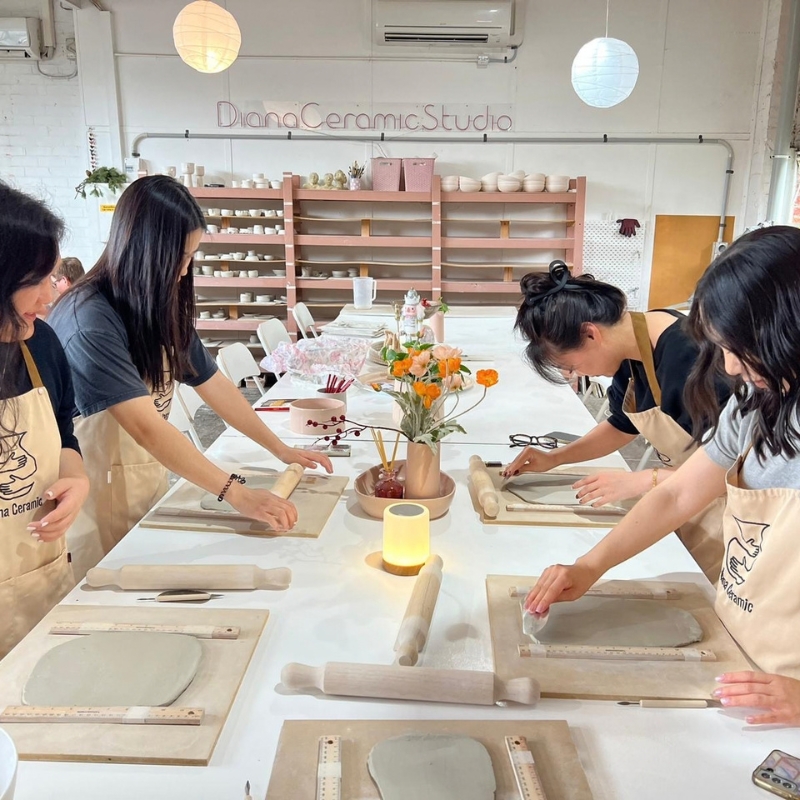
The real trade-off is this: a one-off workshop gets you a finished piece and a taste of the craft in a single sitting, while a multi-week course gets you a repeatable skill you can actually keep. Both are good ways into pottery, and the right one depends on what you want to walk away with. If you have browsed a studio timetable and are weighing up how much time to commit against how much you want to learn, this article lays out what each format gives you, an honest test for which suits you, and how the two connect if you want to start small and build from there. Here is how to choose.
What a one-off workshop gives you
A one-off workshop is a single guided session where an instructor walks you through the basics and you make something from start to finish, with plenty of hands-on help along the way. In one sitting you get a real feel for working with clay, learn the fundamentals of whichever technique the session covers, and come away having made a piece of your own. After the session the studio fires your work, and you collect the finished piece once it is ready.
Who does it suit? A one-off is ideal as a gift, since it is a complete experience in itself that someone can enjoy without committing to anything ongoing. It makes a lovely day out, whether for a date, a birthday or a catch-up with friends, because it is social and low-pressure. And it works as a trial before committing, letting you find out whether you enjoy pottery before signing up for more. If you want to dip a toe in, a beginner wheel throwing workshop gives you a proper taste of the wheel in a single session, with none of the commitment of a course.
What a multi-week course gives you
A multi-week course is a different proposition, because it is built around repetition, and repetition is what actually turns pottery from a one-time experience into a skill. Working with clay, especially on the wheel, is a motor skill, and like any motor skill it is built through repeated practice rather than learned in a single go. A course gives you that repeated practice, with each session building on the last.
What changes between an early and a later session is real and noticeable. In your first sessions you are getting to grips with the basics, centring the clay, controlling its shape, and much of your attention goes on simply making it behave. By the later sessions those fundamentals start to become second nature, so you can centre more reliably, make pieces that are larger and more even, and begin to work with intention rather than just hoping it holds together. That progression is the whole point of a course. If you want to build the wheel skill properly, a beginners wheel throwing course gives you that repeated practice, and if hand building is more your thing, a hand building course for beginners does the same for forming pieces by hand.
The honest test
The clearest way to choose is to match the format to what you are actually after. Here is a short test:
Try a one-off if you are:
- Unsure whether pottery is for you and want to find out before committing.
- Buying for someone else, where a single complete experience makes the better gift.
- After a social session, a fun thing to do with a partner or friends on the day.
Choose a course if you want to:
- Centre reliably, which only comes with repeated practice over several sessions.
- Work bigger, since larger and more ambitious pieces need skill you build over time.
- Build a set, making matching or coordinated pieces rather than a single one-off.
The short version: a one-off answers "do I like this and can I make something today", while a course answers "I want to get good at this". Knowing which question you are asking points you to the right format.
Moving from one to the other
You do not have to decide between them as though it is one or the other forever. A one-off workshop is a sensible route into a course, and many people take exactly that path, trying a single session first and signing up for a course once they know they enjoy it. The reassuring part is that the skills carry across. The feel for the clay, the basics of centring and shaping, and the familiarity with how a session runs all transfer, so the time in a one-off is not wasted if you go on to a course. It gives you a head start rather than a fresh beginning. Starting with a one-off and moving to a course when you are ready is a natural progression, and a low-risk way to find out how far you want to take it.
Choosing your format
It comes down to what you want out of it: a one-off workshop hands you a finished piece and a taste of the craft in a single enjoyable session, while a multi-week course builds a skill you can keep and keep improving. Neither is better, they just answer different questions. Browse our pottery workshops and courses in Melbourne and pick the format that matches what you want out of it.