Handbuilding vs Wheel Throwing: Which Ceramic Style Suits You Best?
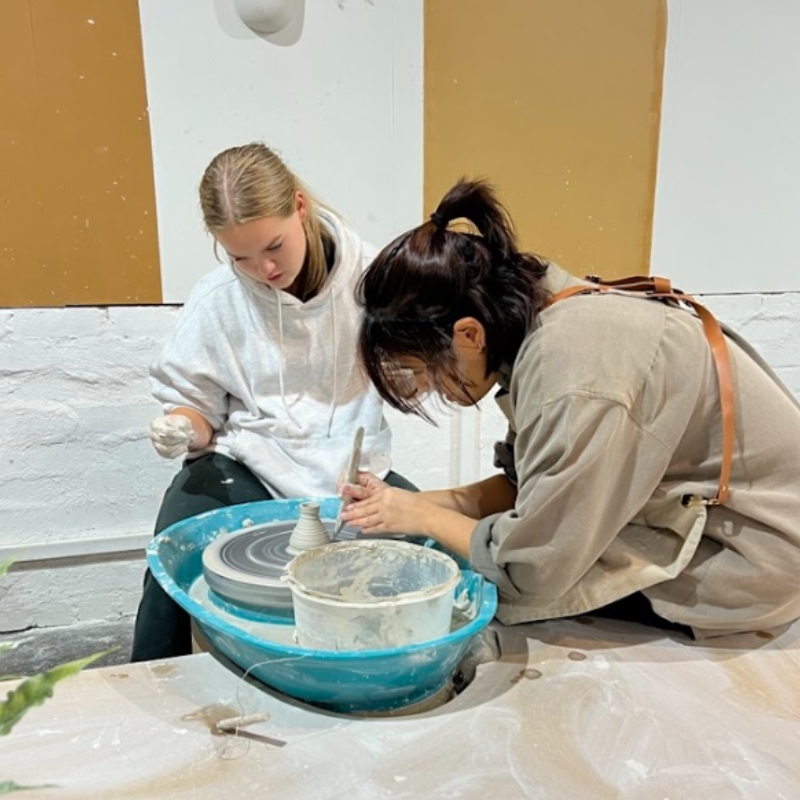
If you’ve ever watched clay spin on a wheel and thought, “That looks so satisfying,” you’re not alone. But then you see a beautiful handbuilt vase with carved texture or an organic mug with a wonky charm, and you wonder if the wheel is even the right starting point.
The truth is: handbuilding and wheel throwing are different experiences, different skill paths, and they suit different personalities. Neither is “better”. The best choice is the one you’ll actually enjoy doing long enough to improve.
This guide breaks down:
- What each method really involves
- What beginners can realistically make
- The learning curve (and the most common frustrations)
- Which style fits your goals, time, and temperament
- How many people in Melbourne end up doing both (and why that’s a great thing)
First, what’s the difference?
Handbuilding (the no-wheel method)
Handbuilding is creating forms without a pottery wheel. You shape clay using your hands and simple tools, usually through:
- Pinch pots
- Coiling
- Slab building
- Sculpting and joining parts
It’s slower, more tactile, and often more forgiving at the start. Handbuilding is also the easiest to continue at home because you don’t need a wheel.
Wheel throwing (the spinning method)
Wheel throwing is forming clay on a rotating wheel. You centre the clay, open it, pull the walls up, then shape it into forms like bowls, cylinders, and vases. Later, you often trim the base on the wheel after it firms up.
Wheel throwing can feel like learning an instrument: tricky at first, but deeply satisfying once the fundamentals click.
Which one is easier for beginners?
“Easier” depends on what you mean:
- Easier to get a result you’re proud of on day one: usually handbuilding
- Easier to make a consistent set of matching cups later on: usually wheel throwing (after you’ve built the core skills)
A realistic first-session comparison
Handbuilding, first session
- You can usually complete a small piece with intention: a mug form, a small planter, a trinket dish, a sculptural object, or a textured tile.
- Your “mistakes” often look like style: fingerprints, soft curves, slight asymmetry.
Wheel throwing, first session
- Many beginners spend a decent chunk of time just learning to centre clay.
- You might make one or two small pieces that survive, or you might make a lot of “practice clay” that gets recycled.
- When it works, it’s magic. When it doesn’t, it can feel like the clay has a personal beef with you.
Quick answer under a normal heading
If you want an early win and creative freedom, start with handbuilding. If you’re motivated by symmetry and repeatable functional forms, wheel throwing is worth the early frustration.
What can you make with each style?
Handbuilding is best for
- Organic shapes and sculptural work
- Textured surfaces (carving, stamping, sgraffito, slip work)
- Forms with angles and planes (like slab-built planters)
- Larger statement pieces built in sections
- Unique, one-off pieces with personality
Common beginner-friendly hand-built projects:
- Pinch bowls and tea light holders
- Slab plates and snack trays
- Small vases and bud vases
- Planters
- Mugs (often with hand-built handles)
Wheel throwing is best for
- Symmetrical forms (cylinders, bowls, bottles)
- Multiples and sets (matching cups, bowls, ramekins)
- Smooth curves and elegant profiles
- Learning precision through repetition
Common beginner-friendly wheel projects:
- Small bowls
- Basic cylinders (the foundation for mugs)
- Simple cups
- Mini vases
The learning curve: what you’ll struggle with (and why)
Handbuilding frustrations (and how to avoid them)
1) Cracks at joins
- Fix: score and slip properly, compress joins, and avoid joining pieces at wildly different dryness levels.
2) Warping
- Fix: compress slabs, dry slowly, flip pieces gently during drying, and keep thickness consistent.
3) Uneven walls
- Fix: Use guide sticks or a rib, and learn to “measure by feel” with your fingers.
4) Pieces breaking while drying
- Fix: slow it down. Melbourne’s weather can swing from dry days to damp spells, and drying too fast is a classic crack trigger.
Wheel throwing frustrations (and how to avoid them)
1) Not being able to centre the clay
- Fix: posture + steady pressure beats brute strength. Small amounts of clay help. Centring is a skill, not a personality trait.
2) Walls collapsing
- Fix: keep the base thicker, use less water, compress the rim, and pull slowly with even pressure.
3) Wobble
- Fix: start with a properly centred mound, keep your arms anchored, and avoid rushing.
4) Trimming feels scary
- Fix: wait for the right dryness (leather-hard), use sharp tools, and take tiny passes.
Which style suits your personality?
This sounds fluffy, but it’s practical. Different brains love different feedback loops.
Choose handbuilding if you…
- Prefer creative freedom over precision
- Like texture, carving, and surface detail
- Enjoy slow crafting and “problem solving with your hands”
- Want projects that don’t rely on perfect symmetry
- Like the idea of making at home (even without a wheel)
Choose wheel throwing if you…
- Love the idea of skill progression and practice
- Want smooth, symmetrical functional pieces
- Enjoy repetition and incremental improvement
- Dream of matching sets (mugs, bowls, plates)
- Find the spinning motion calming (once you get the basics)
A simple decision quiz
Pick the option that sounds most like you.
1) Your dream outcome
- “One-off pieces with character” → handbuilding
- “A neat matching set I’d actually use daily” → wheel throwing
2) Your patience with learning curves
- “I want a satisfying result early” → handbuilding
- “I don’t mind failing while I learn” → wheel throwing
3) Your style preferences
- “Texture, marks, and sculptural details” → handbuilding
- “Smooth lines and symmetry” → wheel throwing
4) Your lifestyle
- “I’d like to keep practising at home” → handbuilding
- “I’m happy to practise in a studio environment” → wheel throwing
If you’re split down the middle, you’re normal. Many ceramicists start with one and happily blend both.
Can you combine handbuilding and wheel throwing?
Absolutely, and it’s one of the most fun ways to work once you have the basics.
Popular combinations include:
- Wheel-thrown cylinder + hand-built handle = classic mug workflow
- Wheel-thrown bowl + hand-built foot ring or alterations
- Wheel-thrown base + handbuilt sculptural additions
- Handbuilt slab form + wheel-thrown neck for a vase
In real studio practice, “either/or” becomes “both/and” pretty quickly.
What to expect in a Melbourne studio environment
Studios vary, but a few Melbourne realities often shape your experience:
- Shared wheels can mean timed turns, which affects how you practise
- Drying behaviour changes with weather (cooler months often mean slower drying)
- Transport matters if you’re carrying pieces on public transport (smaller forms are easier early on)
- Community studios usually emphasise cleanliness and safe dust habits
On that last point: clay dust (silica) is a genuine safety topic in ceramics. It’s not about fear; it’s about good habits like cleaning with wet methods and avoiding dry sweeping. Australia has specific practical guidance for pottery and ceramics that’s worth reading if you’re spending time in a studio: Pottery and ceramics silica safety guidance.
Q&A: Is handbuilding or wheel throwing better for making mugs?
It depends on what you want.
- If you want a mug with personality, thumbprints, or hand-carved texture, handbuilding is fantastic.
- If you want a classic café-style mug with a smooth wall and consistent shape, wheel throwing is the clearer path (especially once you can reliably throw cylinders).
A lot of mug-makers do both: throw the body on the wheel, then hand-build and attach the handle.
Q&A: Do I need strong hands for pottery?
You need endurance more than raw strength.
- Handbuilding can be gentler on some bodies because you can work more slowly and take breaks.
- Wheel throwing can feel demanding early because you’re learning to stabilise your body and apply steady pressure.
If you have wrist, shoulder, or grip issues, you can still do ceramics, but you’ll want to:
- Work smaller at first
- Use a supportive posture
- Ask for adaptations (tool choice, work height, pacing)
Q&A: How long does it take to “get good” on the wheel?
It depends on what “good” means, but here’s a realistic progression:
- First few sessions: centring and basic cylinders are the main challenge
- After several sessions, you start to get repeatable basic forms
- Over time, walls get thinner, shapes become intentional, and trimming/glazing becomes part of your rhythm
Wheel throwing rewards consistency. Even short, regular practice beats one big session every few months.
What to try first if you’re genuinely unsure
Here’s a low-stress path that works for a lot of beginners:
- Try one handbuilding session focused on a functional piece (like a plate, small vase, or mug form)
- Try one wheel session focused on cylinders and bowls (even if you keep nothing)
- Decide what felt more enjoyable, not what looked more impressive
If you’re in Melbourne and want a supportive starting point, the simplest next step is choosing a space that helps you build fundamentals without feeling rushed. Diana Ceramic can be a good option for getting started with pottery in a way that’s structured but still creative.
Mini troubleshooting checklist for beginners
If your hand-built piece cracks
- Dry it slower (cover loosely, avoid direct sun/heaters)
- Keep thickness even
- Compress the clay as you build (especially slabs and coils)
- Score and slip joins, then compress
If your wheel-thrown piece collapses
- Use less water (slippery clay is weaker)
- Pull slower with steadier pressure
- Keep the base thicker
- Compress the rim regularly
If everything feels harder than you expected
That’s normal. Clay is a material you learn by failing gently and often. The win is noticing what happened and adjusting one variable next time.
Choosing based on your goal
Goal: stress relief and creativity
Handbuilding tends to feel calmer for many beginners because you can move at your own pace and still walk away with something.
Goal: functional ware you’ll use every day
Wheel throwing (plus some handbuilding for handles and tweaks) is a strong route if you’re motivated by sets and consistency.
Goal: sculptural work and artistic expression
Handbuilding is the natural home base, with wheel throwing as an optional extra for symmetrical components.
Goal: learning a skill with a clear progression
Wheel throwing is a satisfying “level up” journey, especially if you like measurable improvement.
If you’re aiming to explore both, look for an environment that teaches fundamentals clearly across techniques. A beginner-friendly pottery studio makes it easier to enjoy the learning curve rather than wrestle it alone.
Practical tips to make either path more enjoyable
- Start smaller than you think you should
- Accept that your first pieces are “tuition”, not masterpieces
- Photograph your work (you’ll see progress faster than you feel it)
- Learn basic clay stages (wet, leather-hard, bone-dry), so you stop fighting timing
- Ask for feedback on one thing at a time (rim thickness, join strength, centring)
And if you want the fastest improvement, learn the core foundations rather than bouncing between random projects. That’s why many beginners benefit from a structured approach to learn pottery techniques step-by-step, even if their long-term style becomes wildly experimental.
FAQ
Is handbuilding cheaper to start than wheel throwing?
Generally, yes, because you can practise handbuilding with minimal tools and no wheel. That said, firing and glazing still require access to appropriate facilities unless you have your own setup.
Can I do handbuilding at home?
Yes, with a basic toolkit and a plan for drying. The bigger limitation is firing and glazing, which usually requires a kiln and proper safety practices.
Can I do wheel throwing at home?
You can, but it’s a bigger commitment (wheel, space, cleanup, clay recycling, and ideally kiln access). Many people start in a studio first.
Which is better for kids or teens?
Handbuilding is often easier to start with because it’s less technical in the first session and allows more playful experimentation. Wheel throwing can be introduced once patience and coordination are established.
Which technique is best for plates?
Handbuilding (especially slab building) is typically the easiest for plates. Wheel-thrown plates are possible, but they’re more sensitive to warping and require solid technique.
Which technique is best for bowls?
Wheel throwing is the classic bowl pathway, but hand-built bowls can be beautiful too, especially pinch bowls or coil-built forms with texture.
Will my first pieces be “good”?
They’ll be yours, and they’ll teach you what you need to learn next. Expect progress in stages: first you learn the process, then you learn control, then you learn style.