Family Wheel Pottery Sessions: Can Kids and Parents Learn Together?
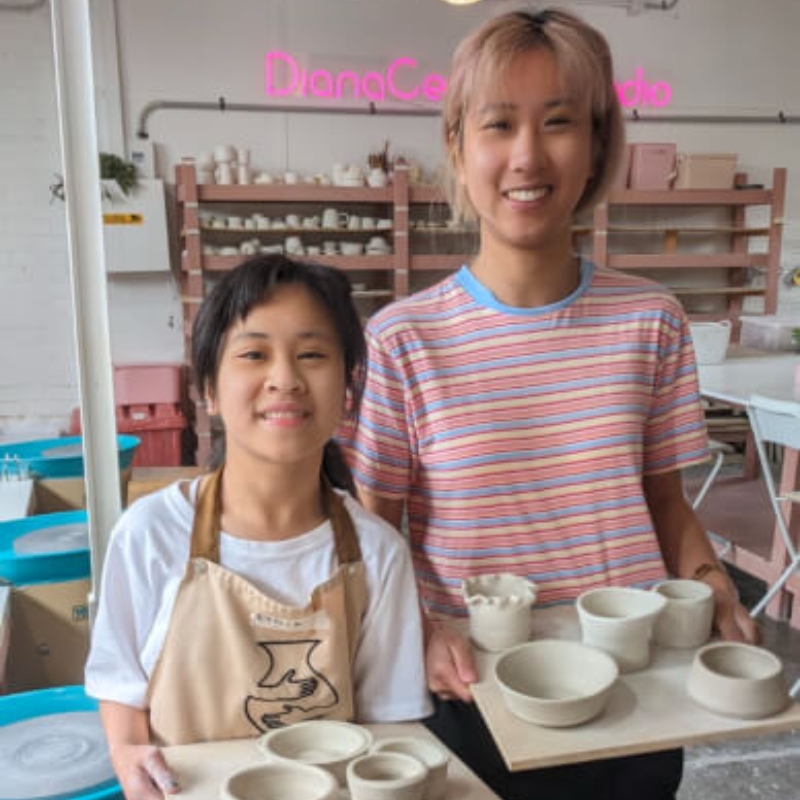
Weekends in Melbourne often fill up with sport, screens and the occasional brunch run. Many families, though, are looking for something a little messier and much more hands-on to share. Wheel-thrown pottery ticks both boxes. Sitting side by side at the wheel, kids and parents learn a slow craft that rewards focus, coordination and laughter in equal measure. But is it practical – and safe – to have adults and children shaping clay in the same session?
Wheel Throwing and Child Readiness
Most studios, including ours, recommend a minimum age of eight for wheel work. Children younger than that often lack the hand span and sustained strength needed to centre clay, and shorter legs find it tricky to brace against the pedal. An experienced tutor can, of course, step in and do the centring for smaller hands, yet the real joy comes when kids feel the clay move under their own power.
At Diana Ceramic we run mixed-age wheel pottery class sessions where every family member works at their own wheel. Parents frequently worry their child will ‘ruin’ a piece; in practice, adults and kids learn the same techniques, just at different speeds. Because clay is infinitely recyclable before its first firing, mistakes cost nothing except a quick re-wedging and a fresh start.
What a Family Session Looks Like
A family workshop usually runs for two hours. After a brief safety chat, each participant is shown how to attach clay to the bat, brace elbows on their thighs and keep wrists locked. Tutors circulate constantly, guiding shoulders rather than grabbing hands so everyone keeps agency over their own piece.
Child aged 8–10:
Usually focuses on learning the basics, such as centring clay with guidance and pulling one or two walls of a piece. Tutor involvement is high, with hands-on demonstrations and regular support throughout the process.
Child aged 11–13:
Typically works more independently, practising skills like centring clay and creating a simple bowl. Tutor involvement is moderate, mainly providing feedback and making small corrections when needed.
Parent/Guardian:
Usually creates their own piece while supporting the child with tasks such as trimming. Tutor involvement is lower, with guidance and feedback provided when required.
Families usually produce three to five pieces between them. If you are wondering is a kids pottery class right for your child, this hands-on experience can be a great way to introduce young makers to the creative process. Because firing schedules take several weeks, everyone heads home clean-handed but clay-splattered, then returns later to pick up glazed work that looks nothing like the wet, grey form they left behind.
Benefits Beyond Clay
Shared creative time is rare once school timetables ramp up. A wheel session gives families 120 unplugged minutes where conversation flows naturally. Children stretch fine motor skills and patience; parents rediscover beginner’s mind. Many tell us the best part is seeing each other persevere through wobbly walls and collapsing cylinders, then celebrate the first upright bowl.
Local teachers have noted another perk: students who attend weekend pottery develop a clearer sense of volume and measurement in maths class. That makes sense when you realise every pull, trim and glaze requires estimating thickness, diameter and shrinkage.
Common Questions from Parents
How messy does it get?
Aprons catch most splatter, and clay washes out of clothes with cold water. We keep separate hand-washing stations so you leave without streaking the car seats.
Can we speak Mandarin or Cantonese in class?
Yes. Our bilingual tutors run dedicated sessions for non-English speakers. For more detail, read our internal guide on the Cantonese and Mandarin wheel throwing workshop.
What if my child gets bored midway through?
Clay has a built-in reset button: slice it, wedge it and start again. Younger makers often switch from the wheel to hand-building small ornaments if their attention drifts.
Do we share one wheel or get individual stations?
Every participant has their own wheel so they can work simultaneously. Parents may slide over occasionally to steady a base or demonstrate a pull, but each maker keeps ownership of their piece.
Safety and Child-Safe Standards
All tutors hold Working with Children Checks, and class numbers never exceed one tutor to six wheels. Seats and splash pans are height-adjustable, reducing the risk of lower-back strain for adults and stabilising posture for kids. We also follow the Victorian Child Safe Standards by recording attendance, maintaining kiln-room exclusion zones and providing non-toxic, lead-free glazes. Families are briefed on the rare but real hazards: spinning pedals pinch shoelaces, and raw glaze dust should never be inhaled. Simple, calm rules keep the studio fun and safe.
Tips for Your First Family Class
• Wear closed shoes and tie back long hair.
• Trim fingernails the night before; sharp nails slice clay walls.
• Bring a labeled towel for easy wheel-side wipe-downs.
• Discuss ahead of time who will take which seat to avoid last-minute shuffles.
• Plan a local café visit afterwards – everyone will be hungry once the adrenaline fades.
A family wheel session is equal parts creative experiment and shared memory-making. With a patient tutor, age-appropriate wheels and clear safety guidelines, parents and children not only can learn together – they thrive together in front of the clay.