Common Beginner Pottery Mistakes (and Exactly How to Avoid Them)
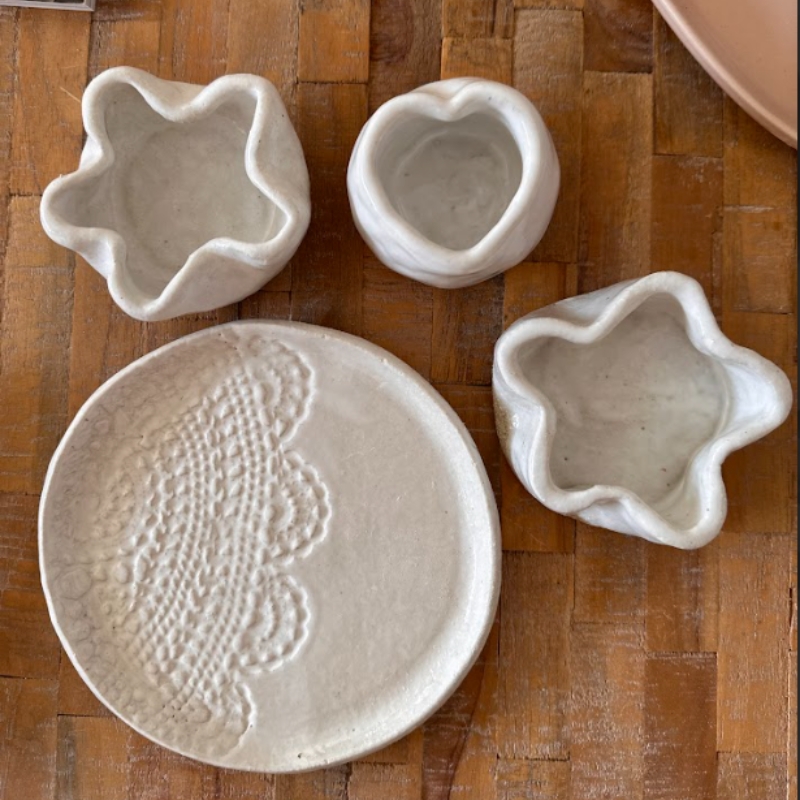
Starting pottery is equal parts calming and chaotic. One minute you’ve made a lovely little bowl, the next it’s split down the side, warped into a potato chip, or comes out of the kiln with a glaze surprise you didn’t order.
The good news: most “beginner disasters” come from a short list of repeatable mistakes. Better news: once you know what to look for, you can prevent them with a few simple habits — and you’ll progress faster because you’ll understand the why, not just the what.
This guide walks through the most common beginner pottery mistakes by stage (prep, forming, drying, trimming, glazing/firing), with clear “symptom → cause → fix” troubleshooting so you can work out what happened and what to change next time.
Before you start: the 3-stage mindset that prevents most failures
If you only remember three principles, make it these:
• Pottery fails more from moisture and thickness than from “bad shaping”.
• Drying is a process you manage, not a stage you rush through.
• Most glaze problems start earlier (surface prep, bisque quality, application thickness).
If you build your habits around those, you’ll save yourself a lot of heartbreak.
Mistakes in clay prep that cause problems later
Mistake 1: Skipping wedging (or wedging “sort of”)
You notice: bubbles, blowouts, weak spots, cracking that seems random, pieces that feel inconsistent.
What’s really happening: air pockets and uneven moisture can create weak points. Even if a piece survives drying, trapped air can expand during firing and cause cracks or blowouts.
Avoid it
• Wedge every new lump of clay (especially reclaimed clay).
• Aim for an even, cohesive feel — not a marbled “wet/dry” mix.
• If wedging hurts your wrists, make smaller portions and wedge more often, not harder.
Mini check: slice your wedged clay with a wire. If you see obvious air pockets or dry seams, keep going.
Mistake 2: Adding too much water to “fix” a stiff clay body
You notice: slumping on the wheel, mushy walls, joins that won’t hold, rims that tear.
What’s really happening: water makes clay feel workable, but it also breaks down the structure fast. Beginners often chase softness when they actually need better centring, better compression, or a slower pace.
Avoid it
• Use a damp sponge and a light touch instead of constant splashing.
• If clay is truly too stiff, wrap it in plastic with a lightly damp cloth for an hour (or overnight), rather than drowning it.
Q&A: Do I really need to wedge clay every time?
If you’re pulling from a fresh bag and it’s already consistent, you may need only minimal wedging. But for beginners, wedging is cheap insurance — it improves consistency and reduces surprises. If your clay has been sitting, reclaimed, or feels uneven, wedge it.
Forming mistakes: wheel throwing and handbuilding
Mistake 3: Not compressing the base (hello, S-cracks)
You notice: a crack shaped like an S (or a curved line) in the bottom of a bowl or plate, often appearing late in drying or after bisque.
What’s really happening: the base is stretched and stressed during forming. Without compression, it shrinks unevenly as it dries.
Avoid it (wheel)
• After opening the clay, compress the base with a rib or your fingers (firm but not gouging).
• Do it again after you refine the form — it’s not “one and done”.
Avoid it (handbuilding)
• Compress slabs with a rib on both sides.
• Avoid leaving thick “puddles” of clay at the base where walls meet the bottom.
Mistake 4: Uneven wall thickness
You notice: warped rims, cracking at thick-to-thin transitions, lopsided drying, or pieces that collapse on the wheel.
What’s really happening: thin areas dry and shrink faster than thick areas. The clay fights itself.
Avoid it
• Aim for consistent thickness more than a perfect silhouette.
• Use your fingers as callipers: pinch gently and feel for thick spots.
• On the wheel, slow down and pull fewer, more deliberate pulls rather than many quick ones.
Save it: if you find a thick spot early, gently collar and compress to redistribute. If it’s late-stage and the wall is already thin elsewhere, it’s often better to keep it as a learning piece than overwork it.
Mistake 5: Overworking the clay (especially when it’s nearly right)
You notice: a form that keeps collapsing, cracks while you’re shaping, surfaces that feel gummy, a rim that won’t stop wobbling.
What’s really happening: clay has a limit. Too much manipulation, plus water breaks down the structure. “Fixing” becomes “weakening”.
Avoid it
• Set a time limit for a piece (especially on the wheel).
• If it starts feeling floppy, stop, wire it off, and try again with a fresh lump.
• Treat practice pieces as reps — not everything needs to be saved.
Mistake 6: Weak joins (handles, spouts, additions that crack off)
You notice: handles separating, cracks around attachments, and joins that look fine wet but fail as they dry.
What’s really happening: clay-to-clay needs mechanical grip (score), bonding slip, and similar moisture levels. If you attach a wet handle to a leather-hard mug (or vice versa), they shrink at different rates.
Avoid it
• Attach at similar stages (leather-hard to leather-hard is ideal).
• Score deeply enough to create texture, not just surface scratches.
• Use slip made from the same clay body.
• Compress the join gently after attaching — don’t leave a “slip sandwich”.
Drying tip: cover handles loosely for longer than the body so they don’t dry faster and pull away.
Q&A: My pot collapses halfway through throwing — why?
Most collapses come from one (or more) of these:
• too much water
• pulling too aggressively (especially at the top)
• walls getting too thin too fast
• not enough compression/structure at the base
If you’re getting repeated collapses, practise centring and controlled pulls with less water, and stop earlier than you think — you can always refine once it firms up a touch.
Drying mistakes (where most beginner heartbreak happens)
Drying is where good work goes to die — unless you manage it intentionally.
Mistake 7: Drying too fast (direct sun, heaters, draughts)
You notice: cracks that appear overnight, rims splitting, handles cracking, slab pieces curling.
What’s really happening: the outside dries and shrinks before the inside catches up. That tension becomes cracks and warps. In Melbourne, indoor heating in winter and sudden warm spells can speed drying more than you expect.
Avoid it
• Dry slowly and evenly: loosely cover with plastic and allow airflow gradually.
• Keep pieces away from heater vents, sunny windows, and strong draughts.
• Rotate pieces occasionally so one side isn’t always facing airflow.
Simple routine
• Day 1–2: fully covered (plastic touching the table is fine; you want humidity).
• Day 3+: loosen the plastic to let moisture escape slowly.
• Final: uncover when it’s evenly leather-hard and holding shape.
Mistake 8: Leaving pieces on a surface that “pulls” moisture unevenly
You notice: warped bases, cracking on the bottom, and slabs curling.
What’s really happening: porous surfaces can pull moisture out quickly from one side. Non-porous surfaces can trap moisture and slow drying only on the bottom. Either can create uneven shrinkage.
Avoid it
• Use a bat, canvas, or a consistent drying board.
• For slabs, flip during drying (carefully) so both sides dry evenly.
Mistake 9: Not supporting forms as they stiffen
You notice: oval mugs, sagging handles, slumped rims, wobbly plates.
What’s really happening: clay moves as it dries. Without support, gravity wins.
Avoid it
• For plates: dry on a flat, stable surface; consider drying between boards for a while.
• For handles: support with soft foam or a rolled bit of paper towel (not pressed hard, just held).
• For tall cylinders: avoid super-thin walls early; let them firm up before dramatic shaping.
Q&A: Why did my piece crack even though it dried “slowly”?
“Slowly” only helps if it’s also even. Common hidden causes:
• thick base + thin walls
• attachment added at a different moisture stage
• one side exposed to airflow
• a piece covered tightly but sitting on a surface that dries the bottom fast
Track what you changed last time — pottery troubleshooting is often pattern recognition.
Trimming mistakes (leather-hard is your best friend)
Mistake 10: Trimming too wet or too dry
You notice (too wet): the pot deforms, chatter marks, and tearing.
You notice (too dry): chipping, cracking, chunks popping off.
What’s really happening: timing is everything. Clay trims cleanly at leather-hard because it’s firm but still workable.
Avoid it
• Test with a fingernail: it should dent but not squish.
• If it’s too wet, wait — or loosely cover for a short time to even out moisture.
• If it’s too dry, you can sometimes rehydrate slightly by wrapping, but don’t expect miracles.
Mistake 11: Trimming the foot too thin
You notice: cracks in the base, a weak feel, and breakage during handling.
What’s really happening: a thin base is vulnerable during drying and firing, and it can exaggerate stress that causes S-cracks.
Avoid it
• Leave a little more thickness than you think at the base, especially on bowls.
• Focus on clean lines and stability, not razor-thin “pro” feet in week one.
Glazing and firing mistakes (the surprise zone)
Even if you’re working in a studio where firing is handled for you, understanding common glaze mistakes helps you avoid heartbreak.
Mistake 12: Glazing dusty or contaminated bisque
You notice: crawling (glaze pulls away), bare patches, uneven coverage.
What’s really happening: dust, oils from hands, or residue can prevent glaze from adhering evenly.
Avoid it
• Wipe bisque with a barely damp sponge and let it dry before glazing.
• Handle bisque cleanly (avoid greasy snacks mid-glaze session).
Mistake 13: Applying glaze too thick (or uneven)
You notice: runs, drips, rough patches, pinholes, overly glossy blobs.
What’s really happening: glaze is chemistry plus thickness. Too thick can cause running and surface defects; too thin can look dry or patchy.
Avoid it
• Stir glaze thoroughly (glaze settles).
• Use consistent dips or brush coats (and follow the studio’s coat guidance).
• Keep notes: glaze name, number of coats, and your result.
Mistake 14: Glazing the bottom (or too close to it)
You notice: glaze stuck to the kiln shelf, sharp edges, a ruined foot ring.
What’s really happening: glaze melts in the kiln. If it reaches the shelf, it becomes glue.
Avoid it
• Leave a clean margin at the base/foot ring.
• If you’re unsure how much to leave, ask the studio what their firing clearance is.
Mistake 15: Expecting glaze to look the same in every kiln
You notice: the same glaze looks different across firings — more matte, more runny, different colour depth.
What’s really happening: temperature, firing schedule, kiln placement, and glaze thickness all change the result.
Avoid it
• Treat your first pieces like tests.
• Photograph results and record how you applied the glaze.
• Try one variable at a time (one glaze, consistent thickness) so you learn faster.
Q&A: Can I “fix” a glaze result I don’t like?
Sometimes. Depending on the studio’s process and the clay/glaze combo, you may be able to reglaze and refire or sand sharp drips. But some issues (like severe running fused to the shelf) aren’t realistically reversible. The best “fix” is keeping good notes so the next one is better.
A quick troubleshooting guide you can use every time
When something goes wrong, run this in order:
- Where did it fail? (forming, drying, trimming, glazing)
- Was the thickness consistent? (thick base + thin walls is a classic)
- Was it drying evenly? (airflow, heat, one side exposed)
- Were the joints matched in the moisture stage? (attachments cracking off)
- Was the glaze applied cleanly and at a consistent thickness?
If you want to troubleshoot faster (and save more pieces), working in a shared studio environment helps because you can sanity-check your steps in real time — that’s where a pottery studio in Melbourne can be a practical next step when you’re ready.
Practice smarter: 3 habits that accelerate your learning
Keep a simple “pottery notebook”
After each session, jot down:
• clay body used
• what you made
• what went wrong (if anything)
• one thing you’ll change next time
This turns random outcomes into repeatable progress.
Make deliberate “test pieces”
Instead of trying to make your dream mug immediately:
• throw or build 3–5 small cylinders
• practise even walls and clean rims
• attach one handle to each at the same moisture stage
You’ll learn faster with repetition than with one “big” piece.
Choose your first clay with intention
A sneaky beginner mistake is treating clay like it’s all the same. It’s not. Some clay bodies are smoother and more forgiving. Others are heavily grogged (more toothy) and can be great for stability, but feel rougher on hands and can behave differently at joins and rims.
If you’re feeling stuck at the “what clay should I even start with?” stage, it’s worth reading a quick perspective on how studio pottery supports exploration and confidence — including the role materials play in what you create: which clay should you choose for your first pottery class.
Get feedback at the right moment
The best time for feedback is before the mistake locks in:
• when the clay is still workable
• when you’re setting up drying
• before you glaze
If you prefer hands-on guidance while you build the basics, learning alongside experienced eyes can shorten the trial-and-error phase — and help you spot the tiny technique fixes that prevent big failures later. When you’re ready, you can learn pottery in a supportive studio and build solid habits from the start.
Studio and home safety habits beginners often miss
Pottery is low-risk compared to many hobbies, but it’s not zero-risk — especially around dust.
• Avoid dry sweeping clay dust; use wet clean-up methods where possible.
• Be mindful of silica dust when sanding or cleaning dried clay.
• Follow studio guidance for handling clay, glaze materials, and clean-up routines.
For an Australian reference point on silica safety in pottery/ceramics, see Pottery and ceramics (silica safety).
If you’re learning in a studio, ask what their normal dust-control and clean-up process is — and copy it.
FAQ: Common beginner pottery mistakes
Why does my pottery crack while drying?
Usually, because drying is uneven (airflow, heat, one side exposed), or because the piece has uneven thickness. Slow down drying, cover loosely, and aim for consistent wall thickness — especially around joins and the base.
What causes S-cracks in bowls?
S-cracks are most commonly caused by insufficient compression of the base during forming, plus uneven thickness and drying stress. Compress the base thoroughly and keep the base thickness consistent.
Why does my mug handle crack off?
Most handle cracks are from mismatched moisture stages (wet handle on leather-hard mug) or weak joining (insufficient scoring/slip/compression). Attach leather-hard to leather-hard, score well, use the same clay slip, compress the join, and dry handles slowly.
Why does my pot collapse on the wheel?
Too much water, overly thin walls, pulling too aggressively, or overworking the clay. Use less water, take fewer controlled pulls, and stop earlier to avoid weakening the structure.
When is the best time to trim pottery?
Leather-hard. Too wet and it deforms; too dry and it chips. If you’re unsure, do the fingernail test: it should dent without squishing.
Why is my glaze running?
Usually, the glaze is applied too thick, too close to the base, or the glaze is naturally runny at that firing temperature. Apply consistent thickness, leave a clean foot ring, and follow studio recommendations for that glaze.
Can I save a warped piece?
Sometimes you can reduce warping by drying more evenly and supporting forms (especially slabs and plates). Once a piece is fully bone-dry or fired, the shape is largely set. Treat early warps as a cue to adjust drying and thickness next time.
How do I know if a piece is bone-dry?
It will feel room-temperature (not cool) against your cheek, and it will look lighter in colour. Uneven coolness often means there’s still moisture inside.
What’s the fastest way to improve as a beginner?
Repeat small forms, focus on consistency (thickness + moisture control), and keep notes. If you want real-time corrections, learning alongside experienced guidance in a studio environment can shorten the trial-and-error phase.